
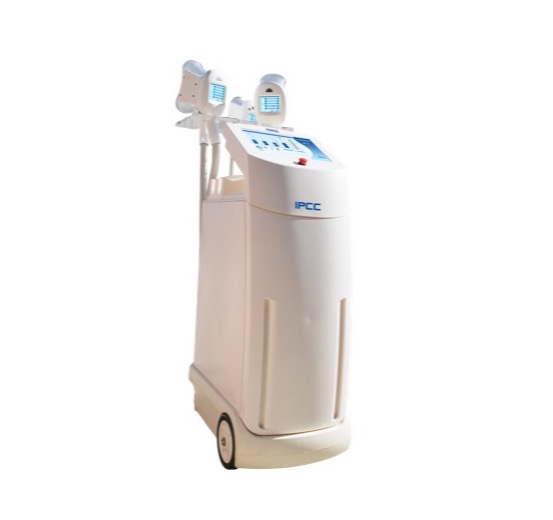
Cryolipolysis is safe when you understand the real risk: paradoxical adipose hyperplasia (PAH). It's rare — reported in roughly 0.5–1% of cases per FDA post-market data — but it's the complication every clinic owner should know about. PAH causes the treated fat to grow, not shrink, and it's almost entirely avoidable with correct applicator fit, proper membrane use, and strict patient screening. Choosing the right applicator isn't just about comfort; it's your primary safety control.
Paradoxical adipose hyperplasia is the opposite of what you're selling. Instead of fat cell death, the treated area develops a firm, painless, well-demarcated mass of fat that can appear weeks to months after treatment. It's not an allergic reaction, not an error in technique — it's a fibrotic tissue response that likely has a genetic component.
PAH is not cosmetic triviality. It requires surgical liposuction or excision to correct. That's a patient who leaves your clinic unhappy and potentially litigious. The FDA has received hundreds of adverse event reports on PAH since cryolipolysis entered the market. The mechanism isn't fully understood, but the pattern is clear: PAH occurs more often when:
Per manufacturer engineering documentation, the cooling plates in cryolipolysis systems are designed to deliver a precise thermal dose. When that dose is disrupted — by poor contact, by tissue that's too thick or too thin — the risk of PAH climbs. Your applicator choice is your first and best defense.
You've seen the charts. Applicator A covers the abdomen, Applicator B covers the flanks. But the real question isn't coverage area — it's fit quality. A cryolipolysis applicator works by vacuum-pulling a fold of fat between two cooling plates. If that fold is too thin, the plates may contact muscle or cause frostbite. If it's too thick, the center of the fold may not reach therapeutic temperature, and the edges may overcool.
This matters more than the sticker price. A clinic running back-to-back sessions with a poorly fitted applicator is a clinic inviting PAH.
Here's what to check when evaluating applicators for your clinic:
| Parameter | Why It Matters for Safety |
|---|---|
| Minimum fat fold thickness | Below 1.5 cm, risk of thermal injury to dermis and muscle increases |
| Maximum fat fold thickness | Above 4 cm, uneven cooling creates zones of incomplete apoptosis |
| Cooling plate curvature | Flat plates on curved anatomy (flanks, inner thighs) cause edge gaps |
| Vacuum strength control | Too strong = bruising and pain; too weak = poor contact and PAH risk |
| Applicator width | Wider isn't always better — narrow applicators fit arms and submental area |
Pmise engineering documentation specifies that each applicator model has a validated fat fold range. Using an applicator outside that range voids the safety margin built into the cooling algorithm. Don't guess. Measure the fat fold with calipers before every session.
The gel membrane between the applicator and the patient's skin serves two purposes: it protects the epidermis from direct cold injury, and it ensures uniform thermal conduction. Running a cryolipolysis session without a fresh, intact membrane is like driving without a seatbelt. You'll probably be fine — until you're not.
Key membrane safety rules:
Per ISO 13485 quality management standards for medical device manufacturing, the membrane is classified as a single-use accessory. Treat it as such. Your liability insurance will thank you.
Cryolipolysis is a non-invasive procedure, but it's not for everyone. The FDA-cleared indications specify treatment of visible fat bulges in individuals with a BMI of 30 or lower. That's not a suggestion — it's a safety limit.
Absolute contraindications you must screen for:
Relative contraindications that require caution:
Your intake form should include a specific question about family history of PAH. If the answer is yes, consider referring the patient to a surgical alternative like liposuction.
Despite your best screening and technique, PAH can still happen. The incidence is low — FDA post-market surveillance reports suggest around 0.5% of treated patients — but you need a protocol.
Your incident response plan:
One PAH case doesn't mean your clinic is doing something wrong. But how you handle it determines whether that patient becomes a legal problem or a learning opportunity.
Not all cryolipolysis machines are built to the same standard. When you're evaluating equipment, look beyond the treatment head count and ask about safety engineering.
Safety features to demand:
For a deeper look at how cryolipolysis technology works and what to check before buying, read our Cryolipolysis Machine Guide: Fat Freezing Tech for Clinics. And if you're comparing body contouring modalities, our breakdown of Cavitation vs Cryolipolysis will help you decide what to offer.
One more thing: don't confuse "non-invasive" with "no risk." Cryolipolysis is a medical device procedure. Treat it with the same seriousness you'd give a laser or RF treatment. Your patients trust you with their bodies. Earn that trust by knowing the risks — and how to avoid them.
What does this guide cover?
Cryolipolysis is safe when you understand the real risk: paradoxical adipose hyperplasia (PAH). It's rare — reported in…
Every Pmise machine is verified through rigorous testing. Tell us your target treatments and market.