
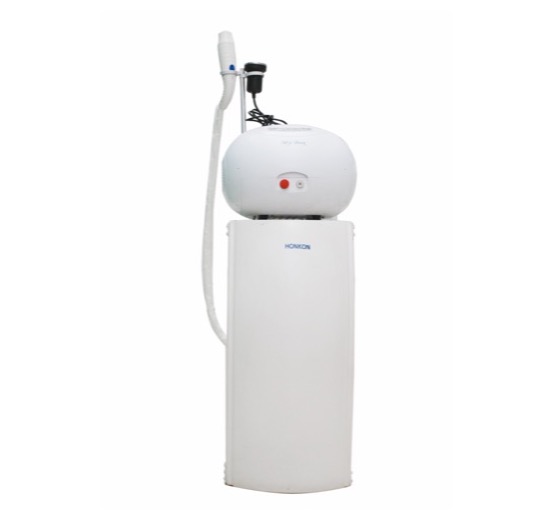
An ultrasonic cavitation machine runs at 40kHz. Those sound waves create pressure changes inside fat cells. The cells rupture and release their contents. Your body then processes and eliminates the fatty acids naturally. It's a non-invasive body contouring tool — not a weight loss device — and it works best on localized fat deposits that resist diet and exercise. For your clinic, the buying decision isn't just frequency. It's transducer quality, power stability, and how the machine handles real-world session flow. You'll feel the difference in daily use.
We get this question all the time: "Does the ultrasound really pop the fat cells?" Short answer: yes. But it's not an explosion. It's a pressure game.
The transducer in the handpiece generates sound waves at 40kHz. That's 40,000 cycles per second — well above human hearing. When those waves travel through tissue, they create alternating high and low pressure zones in the fluid around your fat cells. During the low-pressure phase, dissolved gases come out of solution and form microscopic bubbles. We call this acoustic cavitation.
Here's where the physics gets interesting. On the next pressure cycle, those bubbles collapse — rapidly. The collapse creates a localized shockwave. It puts mechanical stress on the adipocyte (fat cell) membrane. Do this thousands of times per second, and the cell wall eventually gives way. The cell ruptures.
But here's what many sales brochures skip: the cell doesn't disappear. It spills its contents — triglycerides and free fatty acids — into the interstitial space. Your body's lymphatic system then has to transport those lipids to the liver for processing and elimination. That's why a single session won't give you a flat stomach. The clearance process takes time.
We've watched technicians in busy clinics work through this. A common mistake? They treat the same area too aggressively. They think more power equals more fat loss. It doesn't. You're creating a metabolic load on the lymphatic system. Push too hard and you get temporary swelling or tenderness — not better results. Your patients will thank you for restraint.
You'll see a lot of conflicting advice on treatment frequency. Let's cut through it. Based on what we've seen work across hundreds of clinics, here's the reliable framework:
| Parameter | Recommended Range | Why It Matters |
|---|---|---|
| Treatment area per session | One area (e.g., abdomen, each flank, each thigh) | Lymphatic clearance capacity is limited per session |
| Session duration per area | 20–30 minutes | Longer sessions don't increase fat loss; they risk tissue fatigue |
| Interval between sessions | 5–7 days | Allows lymphatic system to clear released fat before next treatment |
| Total sessions per course | 6–12 | Realistic expectation for visible contour improvement |
| Power setting | Start at 60–70%, increase gradually | Patient comfort and avoiding over-treatment |
Honestly, this is where most buyers slip. They look at a machine's maximum power output and assume more is better. It's not. A well-calibrated 40kHz transducer running at 70% power delivers more consistent cavitation than a cheap one cranked to 100%. The transducer quality determines the uniformity of the sound field. That's what matters for consistent cell disruption across the treatment area. Your results depend on it.
Let's be direct about scope. An ultrasonic cavitation machine is excellent for localized fat deposits — the stubborn pockets on the abdomen, love handles, inner and outer thighs, and the "bra fat" area. It's not a tool for generalized obesity or large-volume fat reduction. You need to set clear expectations.
Your clients should be within a healthy weight range — typically within 15–20 kg of their ideal body weight — with specific areas they can't shift through exercise. Think of it as a contouring tool, not a weight loss device. We've seen clinics lose credibility fast by promising dramatic inch loss to overweight patients who need lifestyle intervention first. Don't be that clinic.
The typical result? A visible reduction in circumference of 2–5 cm per treated area over a full course of sessions. That's meaningful for a patient who's already lean but can't lose that last bit of belly fat. It's not a replacement for liposuction on larger volumes. You'll know the difference.
You're buying a machine you'll use every day. Here's what actually matters on the floor:
Transducer contact. The handpiece must maintain full contact with the skin. If the technician lifts even slightly, you lose cavitation energy into the air gap. Good machines have a contact sensor that cuts power when the head loses skin contact. This isn't a luxury feature — it's essential for consistent treatment and avoiding operator error. Your technicians will appreciate it.
Gel matters more than you think. You need a water-based ultrasound gel, not a massage lotion. The gel couples the sound waves into the tissue. Cheap gel with air bubbles or inconsistent viscosity kills transmission efficiency. We've seen clinics switch gels and get noticeably better results from the same machine. Why leave that on the table?
Movement technique. The technician should use slow, overlapping circular motions. Too fast and you don't deliver enough energy to any single spot. Too slow and you risk discomfort. About 10–15 seconds per small area is the sweet spot we've observed in well-trained hands. Your training protocol should emphasize this.
Hydration protocol. After treatment, patients need to drink water — significantly more than usual. The lymphatic system needs fluid to transport the released fatty acids. We recommend at least 1.5–2 liters of water in the 24 hours following a session. Some clinics provide a post-treatment hydration guide. Smart move. Your patients will notice the difference in results.
Most clinics don't run cavitation as a standalone service. It's typically part of a package. The most common pairing we see is cavitation followed by RF skin tightening on the same area. The logic is straightforward: cavitation shrinks the fat compartment, and RF tightens the skin envelope over it. Patients see a smoother contour than either treatment alone can deliver. Your clinic can build a package around this.
Another effective combination is cavitation with cryolipolysis. Some clinics use cryolipolysis for larger fat volumes and cavitation for smaller, more precise areas. The two technologies aren't competitors — they address different fat pocket profiles. You'll want both in your toolkit for versatility.
We also see cavitation used before HIFU treatments on the abdomen. The idea is to reduce fat thickness so the HIFU energy reaches the deeper fascial layers more effectively. There's no formal study on this sequence, but clinical experience from several Pmise distributor clinics suggests it improves HIFU outcomes on thicker abdomens. Worth testing in your own practice.
Ultrasonic cavitation is generally safe when used correctly, but you need to screen patients properly. The manufacturer specifications for any reputable machine will list contraindications. These typically include:
There's no FDA clearance specifically for ultrasonic cavitation as a medical device for fat reduction. The technology operates under general aesthetic equipment regulations. That's why CE marking and proper certification from the manufacturer matter. You're relying on the device's engineering and your clinical judgment, not a regulatory body's efficacy determination. Don't skip this due diligence.
We always recommend running a patch test on new patients — treat a small area on one flank, wait 48 hours, and check for adverse response before proceeding with a full session. This catches rare sensitivities and builds patient trust. Your clients will feel safer for it.
If you're in the market for an ultrasonic cavitation machine, here's what we look at when we evaluate our own units:
Frequency stability. The machine should maintain 40kHz ± 1kHz under load. Some cheaper units drift to 38kHz or 42kHz as the transducer heats up. That changes the cavitation threshold. Ask the manufacturer for a frequency stability spec under continuous operation at 70% power for 30 minutes. You'll want that on paper.
Output power. Look for a machine that delivers at least 3–5 W/cm² at the transducer face. Lower than that and you're not reaching the cavitation threshold in deeper fat layers. Higher than 8 W/cm² and you risk tissue damage without proportional benefit. Stick to that range.
Handpiece cooling. The transducer generates heat. Without active cooling, it will shut down mid-session or drift in frequency. Air-cooled handpieces are fine for light use. For daily clinic work, liquid-cooled is more reliable. Your busy schedule demands it.
Treatment area size. Larger transducer heads (8–10 cm²) cover more area per session but are harder to contour on curved body parts. A set of two handpiece sizes is ideal — one large for the abdomen and flanks, one smaller for arms and inner thighs. You'll have flexibility for every client.
For a deeper dive into the buying process, see our slimming machine buying checklist. It covers the five verification steps we recommend every clinic runs before purchasing any body contouring equipment.
The bottom line? A 40kHz ultrasonic cavitation machine is a solid addition to your clinic's body contouring lineup — provided you understand its limits, train your staff on proper technique, and buy from a manufacturer who can speak to transducer quality and real-world performance, not just marketing specs. You'll see the difference in your results.
Is 40kHz the only frequency that works for fat reduction?
No. While 40kHz is common for cavitation, some machines use 28kHz for deeper penetration or 80kHz for superficial fat. However, 40kHz is considered optimal for targeting subcutaneous fat without damaging surrounding tissues. Look, the transducer quality and power stability matter more than frequency alone. Don't get hung up on just that number. Your clinic's results depend on the whole system.
How many sessions are needed to see results?
Most protocols recommend 6–12 sessions, spaced 3–7 days apart, depending on the area and fat thickness. You'll typically see visible results after 3–4 sessions, with final outcomes showing up 2–4 weeks post-treatment as the body processes the released fat. Individual results vary, of course. But that's the realistic timeline you should set with patients.
Can this machine be used on any body part?
It's most effective on localized fat deposits like the abdomen, thighs, flanks, and arms. You'll want to avoid bony areas, the neck, and regions with large blood vessels or nerves. Stick to the manufacturer's guidelines for safe application areas — that's non-negotiable. Your patients' safety comes first.
What is the difference between cavitation and liposuction?
Cavitation is non-invasive: it uses sound waves to rupture fat cells, which are then naturally eliminated by your body. Liposuction is surgical, requiring incisions and suction to remove fat. Cavitation has no downtime but needs multiple sessions; liposuction offers immediate results but involves recovery and risks. Pick based on what your patient can handle. That's the honest answer.
Every Pmise machine is verified through rigorous testing. Tell us your target treatments and market.