
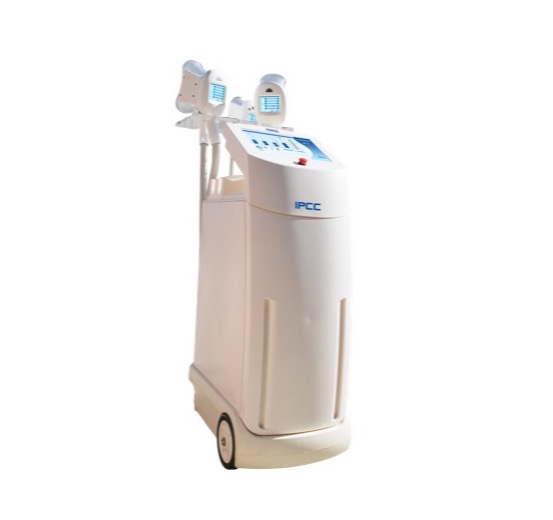
The profitability of a body contouring business is determined by the unit economics of each session, not by machine price alone. A clinic owner must model three levers—session price, per-treatment consumable cost, and daily throughput—to calculate gross margin per machine. Payback period equals total machine cost divided by monthly gross margin, a formula the buyer fills with their own local numbers. The technology choice (cavitation vs. cryolipolysis) directly alters consumable cost structure and session price positioning.
A body contouring business generates revenue per occupied treatment room, per session. The first decision is session price band positioning, which depends on the technology offered and the local market.
Pricing strategies to consider:
Do not set a session price without first calculating your break-even cost per treatment, which includes consumables, staff time, and room overhead.
Capital equipment is a fixed cost recovered over its useful life. The standard accounting method is straight-line amortization: machine cost divided by estimated working months. For example, a device with a 5-year life is amortized over 60 months. This monthly cost must be covered by gross margin from sessions.
This is the critical differentiator between technologies.
| Technology | Consumable Type | Cost Characteristic |
|---|---|---|
| Ultrasonic Cavitation | Conductive gel (reusable per client) | Low, per-bottle cost |
| Cryolipolysis | Single-use membrane applicator | Per-session, fixed cost |
| RF Skin Tightening | None (electrode, no disposable) | Zero per-cycle cost |
| HIFU | Cartridge (fixed number of pulses) | Per-cartridge cost, high if low throughput |
Each session occupies a treatment room and a staff member. Estimate your cost per minute for the room (rent, utilities, depreciation) and the staff member (wage, benefits). Multiply by session duration. A 30-minute cavitation session has a lower staff+room cost than a 60-minute cryolipolysis session, which requires client preparation and post-treatment care.
Your maximum revenue is capped by how many sessions one machine can deliver. Use this formula with your own local numbers:
Monthly Session Capacity = (Sessions per day) × (Working days per month)
Where Sessions per day = (Available treatment hours per day) ÷ (Average session duration including setup and cleanup).
Example logic: If a clinic operates 8 hours per day, and a cavitation session takes 30 minutes (including client intake and cleanup), the theoretical maximum is 16 sessions per day. Real-world utilization is typically 60–75% due to cancellations, no-shows, and gaps. So a realistic estimate is 10–12 sessions per day.
Now calculate Monthly Gross Margin:
Monthly Gross Margin = (Actual sessions per month × Revenue per session) − (Actual sessions per month × Cost per session)
Cost per session includes consumables, staff time, and room cost allocated per treatment.
Payback period is the time required for cumulative gross margin to equal the machine's purchase price. It is a standard business-finance concept (capital budgeting) and needs no external report to validate.
Payback Period (months) = Total machine cost ÷ Monthly gross margin
Total machine cost includes the device price, shipping, installation, training, and any initial consumable stock. Monthly gross margin is calculated as above.
What a reasonable payback period looks like:
The device mechanics determine your cost structure and price positioning. Per Pmise engineering documentation:
For a deeper comparison of cavitation and cryolipolysis business models, see our guide: Cavitation vs Cryolipolysis: Which Body Contouring to Offer?
For total cost of ownership considerations across device types, read Used vs New Aesthetic Lasers: Total Cost of Ownership.
For importing and certification requirements that affect machine cost, see CE Marking for Beauty Machines: What Importers Must Check.
For safety and applicator selection in cryolipolysis, refer to Cryolipolysis Safety: Avoiding PAH & Choosing Applicators.
Pmise engineering documentation for ultrasonic cavitation, cryolipolysis, and RF skin tightening systems. General business-finance concepts: amortization, gross margin, and payback period are standard accounting and capital budgeting principles. Safety and device classification per IEC 60825 (laser safety) and ISO 13485 (quality management for medical devices) are well-established public standards.
What is the typical payback period for a body contouring machine?
The payback period equals total machine cost divided by monthly gross margin. For example, a $50,000 machine generating $5,000 monthly gross margin pays back in 10 months. Your actual period depends on your session price, consumable costs, and daily throughput.
How do consumable costs affect profit per session?
Consumable costs vary by technology—cavitation uses gel (low cost), while cryolipolysis uses disposable applicators (higher cost). Higher consumable costs reduce per-session profit. For instance, a $300 session with $50 consumables yields $250 gross profit, versus $280 with $20 consumables.
What is a realistic daily throughput for a body contouring machine?
Throughput depends on treatment time and staff. A typical cryolipolysis session takes 60 minutes, allowing 6-8 sessions per day per machine. Cavitation sessions are shorter (30 minutes), enabling 12-16 sessions daily. Higher throughput increases daily gross margin.
How should I price body contouring sessions to ensure profitability?
Price based on local market rates and your cost structure. A common range is $200-$500 per session. Calculate break-even by dividing total machine cost by (session price minus consumable cost) times expected sessions. Ensure your price covers consumables, labor, and overhead while remaining competitive.
Every Pmise machine is verified through rigorous testing. Tell us your target treatments and market.