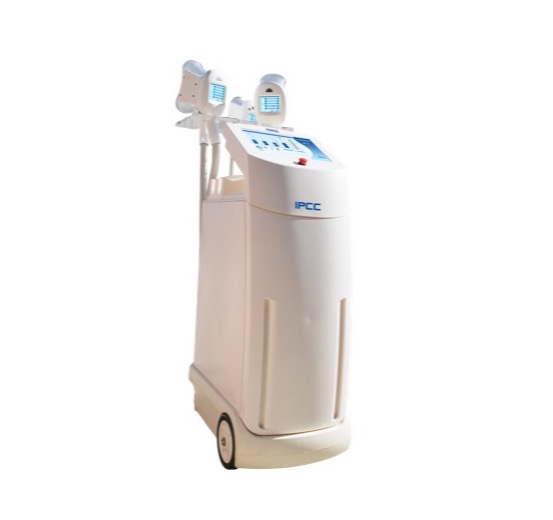
The right body contouring machine turns a treatment room into a profit centre. But only if you understand the difference between cavitation, cryolipolysis, RF, and laser lipo. Pick the wrong modality – or a device with flimsy engineering – and you’ll burn money on sessions that don’t deliver. Here’s what to buy and why.
What a Body Sculpting Machine Actually Does
A non invasive body contouring machine reduces fat and tightens skin without cutting the patient. No incision. No anaesthesia. No downtime. That’s the promise, but the mechanism varies wildly. Some technologies destroy fat cells. Others shrink them. A few tighten the overlying skin so much that the silhouette changes even if the fat stays put.
Most clinic owners aren’t physicists. You don’t need to be. What you need is a simple mental model:
fat type + skin laxity = the right technology. Soft, pinchable fat responds well to cavitation or cryolipolysis. Fibrous fat — the kind that feels dense — often needs laser or RF. If the skin sags after the volume drops, add a skin-tightening modality. Miss this, and clients won’t see results. They won’t rebook.
The Main Technology Types at a Glance
The table below sums up the workhorses. It’s rough, but it’ll stop you from buying a machine that only does one thing when your client base needs another.
| Technology |
How It Works |
Best For |
Skin Tightening? |
| Cavitation |
Low-frequency ultrasound creates microbubbles that implode and mechanically disrupt fat cell membranes. Fat content spills into the interstitial fluid and gets cleared by the lymphatic system. |
Soft, superficial fat on the belly, thighs, and flanks. Works on patients with good skin elasticity. |
No, or very mild secondary effect. |
| Cryolipolysis |
Controlled cooling that triggers apoptosis (programmed cell death) in fat cells without damaging the overlying skin. The body slowly eliminates the dead cells over weeks. |
Stubborn, pinchable pockets – love handles, lower belly pooch. Not for large volumes or obese patients. |
No. Can leave loose skin if the fat reduction is significant. |
| Radiofrequency (RF) |
Electromagnetic energy heats the dermis and subcutaneous fat to ~40–45°C. Collagen fibres denature and contract immediately; new collagen synthesis occurs over months. Some bulk heating of fat also occurs. |
Mild fat reduction with a strong skin-tightening effect. Ideal for post-weight loss laxity or facial contouring. |
Yes, primary effect. |
| Laser Lipolysis (1064nm/980nm) |
Laser energy delivered via paddles or suction handpieces penetrates to the fat layer, heating adipocytes to destruction while sparing the epidermis. Often paired with vacuum massage. |
Fibrous fat areas and patients with moderate skin laxity. Faster results than cryolipolysis alone when combined with tightening. |
Moderate. Collagen remodelling from heat. |
| HIFU (High-Intensity Focused Ultrasound) |
Focused ultrasound beams converge at a precise depth (typically 1.3–13mm) to create thermal coagulation points in the SMAS layer and fat, leaving the skin surface untouched. |
Deep fat and significant skin laxity. Often used on the lower face and submentum, but body applicators exist. |
Yes, strong lifting effect. |
You’ll notice that no single technology does everything. That’s why multi-function platforms are eating up the market. A body sculpting machine that stacks cavitation with bipolar RF, vacuum, and infrared gives you a single device that handles soft fat, fibrous fat, and skin laxity in one session. That throughput matters more than the sticker price.
Matching the Machine to Your Clinic’s Workflow
If you’re a med-spa running back-to-back 45-minute sessions, a cryolipolysis-only system will frustrate you. The treatment takes 35–60 minutes per applicator, and the results take 8–12 weeks to show. Clients get antsy. RF and cavitation sessions, on the other hand, take 20–30 minutes and the feedback is immediate — the tape measure moves.
That doesn’t make cryolipolysis bad. It makes it a high-ticket, low-volume add-on. A smart setup: a multi-function body contouring machine for weekly volume, plus one cryolipolysis unit for the clients who want a dramatic, gradual change and are willing to pay. You can charge premium prices for the latter precisely because it feels like a medical procedure, not a spa treatment.
Think about your staff, too. A machine that requires a physician on hand because it uses a Class IV laser will change your operating costs. A non-invasive device based on RF or ultrasound often needs no special licensing beyond standard esthetic regulations — but check your local rules.
ROI: What Clinic Owners Really Need to Know
Let’s get practical. The price of a body contouring machine from a direct manufacturer like Pmise is a fraction of what you’d pay for an equivalent Western-branded system. That gap — dramatically lower — is your margin runway.
A treatment session priced at $150–$300 per area, running a handful of clients a day, can generate enough revenue to cover the hardware in months, not years. No need for complex spreadsheets. After the machine is paid off, the consumable costs are near zero for most non-invasive tech (cryolipolysis uses anti-freeze membranes that cost pennies; cavitation uses gel). Your main ongoing costs are the room, the electricity, and the therapist’s time.
But there’s a catch: a machine that breaks down erases that math. If it’s out of commission for two weeks while you wait for a replacement handle from a seller with no service network, you’ve lost not just revenue but trust. That’s the real risk with cheap, unengineered copies.
Pmise insight: In our experience, the most profitable clinics don’t buy the fanciest machine. They buy a platform that handles multiple modalities, ships with clearly documented service manuals, and comes from a manufacturer that stocks replacement parts for years – not months. A cavitation-RF-vacuum combo unit, for example, can cover the vast majority of body contouring needs in a typical salon. It’s the workhorse, not the trophy horse, that prints money.
Specs That Separate a Real Machine From a Toy
Here’s what to look past the glossy brochure:
- Cavitation frequency: 40 kHz is the standard for fat disruption. Anything above 50 kHz tends to be a skin cleanser, not a body contouring tool. Check whether the handpiece outputs a consistent, focused beam. Per Pmise engineering documentation, multi-pole cavitation heads with multiple transducers create a broader treatment field and reduce hot-spotting.
- RF power and mode: You want at least 50W of delivered RF energy, with a switchable bipolar/multipolar configuration. Bipolar is shallow and safe for thin-skinned areas; multipolar goes deeper. Energy control should be in real-time watts, not arbitrary “levels.” The Ultrasonic Cavitation system from Pmise, for instance, pairs 40kHz ultrasound with a multipolar RF handpiece that gives you independent control over energy and vacuum.
- Cryolipolysis cooling capacity: Look for a compressor-based system that reaches and maintains -10°C to -5°C at the applicator head. Thermoelectric (Peltier) coolers still exist on cheap units; they can’t hold temperature reliably in a warm treatment room. This isn’t speculation — it’s basic thermodynamics. The vacuum should pull -50 to -70 kPa to achieve good tissue coupling.
- Ergonomics: Handpiece weight matters. A heavy, unbalanced head leads to therapist fatigue and inconsistent pressure. Test it yourself. If the rep can’t hand you a working demo unit to feel, walk away.
Cryolipolysis, in particular, is a technology where engineering quality is non-negotiable. A poorly calibrated cooling plate can cause freezer burn. The FDA-cleared principle is well-established: adipocytes are more cold-sensitive than skin cells, so controlled cooling triggers apoptosis while sparing the dermis. But that assumes precise temperature regulation. A machine that drifts below -10°C is a liability. We’ve covered
cryolipolysis machines in detail elsewhere; the key takeaway: cold uniformity across the entire applicator surface is what you’re paying for.
Is a Multi-Technology Body Contouring Machine Worth It?
Yes, with a condition. The combination needs to be electrically integrated, not just three handpieces plugged into the same box with a software toggle. Pmise’s slimming platforms, for example, run vacuum,
bipolar RF, infrared, and mechanical rollers in a single treatment head, with the vacuum actively pulling tissue into the RF and IR field. That synergy — vacuum drawing blood to the surface while RF heats the dermis — gives better skin tightening than running the modalities sequentially. The manufacturer’s engineering records describe these “Slimming (Vacuum+Bi-polar RF+IR+Roller)” combos, and the principle hasn’t aged: simultaneous energy delivery builds heat faster, shortens session time, and improves client comfort.
That said, don’t buy a Swiss Army knife that does everything poorly. If a machine claims to do cavitation, RF, laser lipo, and cryolipolysis from the same chassis at an implausibly low price, suspect every single mode. Good transducers, a compressor, a laser diode stack, and an RF generator each cost real money to build right. At that price, something is a sticker.
Choosing a Manufacturer That Won’t Leave You Stranded
You’re buying a relationship, not just hardware. A
beauty equipment manufacturer that has been in the game for over a decade — Pmise evolved from a Beijing-based firm founded in 2004 — will have seen most failure modes. They’ll have a library of technical bulletins. Ask the following before wiring any deposit:
- Are you certified to ISO 13485 for medical device quality management? (Pmise is, and the certification is verifiable.)
- Do you stock handles, LCD screens, and power supplies for models you sold five years ago? If the answer is “we always upgrade,” you’re dealing with planned obsolescence.
- Can I speak to three clinics using your body sculpting machine in my country? No reference list should raise a flag.
- What’s the warranty on the compressor (for cryo) or laser diode (for laser lipo)? The expensive bits. Anything less than 18 months is a tell.
A practical note: shipping a body contouring machine from China involves freight forwarders, customs clearance, and voltage configuration. A manufacturer that has done it thousands of times will pre-configure the power supply for your region, include the correct plugs, and handle the logistics. You want a single point of contact, not a treasure hunt. Older company records mention branches in Europe and North America; today, Pmise ships direct from Beijing with DDP terms to many countries, so you know the landed cost upfront.
Your biggest risk isn’t the upfront cost — it’s the downtime when a machine breaks mid-package. Buy from a company that treats service as a core product, not an afterthought.
FAQ
What are the key differences between cavitation, cryolipolysis, RF, and laser lipo for body contouring?
Cavitation uses ultrasound to disrupt fat cells, cryolipolysis freezes them, RF heats tissue to tighten skin and reduce fat, and laser lipo uses laser energy to liquefy fat. Each has different mechanisms, treatment areas, and client comfort levels. Choosing depends on desired outcomes: cavitation for immediate inch loss, cryolipolysis for gradual fat reduction, RF for skin tightening, and laser for combined effects.
How do I assess the return on investment (ROI) when purchasing a body contouring machine?
Calculate ROI by estimating the number of treatments needed to recoup the machine cost. Consider machine price, per-session consumables, technician time, and local market pricing for each service. A device that enables higher-priced treatments or attracts more clients accelerates payback. Also factor in maintenance costs and expected lifespan. Avoid overpromising; conservative projections prevent cash-flow surprises.
What safety considerations should I evaluate before buying a non-invasive body contouring device?
Ensure the device has FDA clearance or CE marking for intended use. Check for built-in safety features like real-time temperature monitoring, auto-shutoff, and adjustable energy levels. Review clinical data on side effects—common ones for RF and laser include temporary redness, while cryolipolysis may cause numbness. Ask about training support and treatment protocols to minimize risks. Staff certification is often required.
What maintenance and consumables are typically required for body sculpting machines?
Maintenance varies: cryolipolysis machines need regular disinfection of applicators and membrane replacement after hundreds of cycles. RF and laser devices may require periodic calibration and handpiece replacement. Ultrasound cavitation machines often have minimal consumables. Factor these into your total cost of ownership. Ask manufacturers about warranty coverage, servicing schedules, and availability of spare parts to avoid unexpected downtime.