
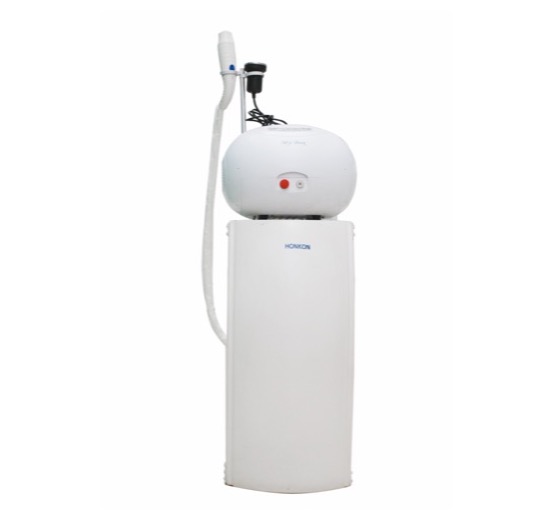
If you’re deciding between cavitation and cryolipolysis for your clinic, the short answer is: offer both. They target fat through completely different mechanisms — ultrasound vs cold — so they suit different body types, budgets, and client expectations. Cavitation works faster per session and costs less to buy, but cryolipolysis has stronger marketing recognition and FDA-clearance history. A smart menu uses both.
Let’s start with the mechanism, because that drives everything else — session time, candidate selection, and how you price it.
Cavitation uses low-frequency ultrasound, typically 40 kHz, delivered through a handheld transducer. The sound waves create microscopic bubbles in the fat cell membranes. Those bubbles oscillate, collapse, and rupture the cell wall. The fat cell dies, and its contents — triglycerides — are released into the interstitial space. From there, the lymphatic system clears them over the following days and weeks.
This is a mechanical, non-thermal process. No heat, no cold. Per manufacturer specifications, the transducer must maintain direct contact with the skin through a coupling gel. The effective depth is roughly 1–2 cm of subcutaneous fat. That matters for client selection — you’ll need a pinchable fat layer.
Cryolipolysis applies controlled cooling to freeze fat cells. The idea is that fat cells crystallize and die at a higher temperature than surrounding tissue — around +4°C to -10°C at the applicator surface, depending on the paddle. The dead cells then trigger an inflammatory response, and over 8–12 weeks macrophages clear them out.
The key parameter is vacuum suction combined with cooling. The applicator pulls the fat bulge between two cooling plates. This limits treatment to areas where you can “pinch” a roll — the abdomen, flanks, inner thighs, and submental fat. The FDA cleared the first cryolipolysis device in 2010, and the technology is classified as a medical device under IEC 60601-1 safety standards.
Your marketing and consultation scripts change depending on which machine you’re booking. Here’s the split.
| Criterion | Cavitation | Cryolipolysis |
|---|---|---|
| Ideal fat thickness | ≥1 cm pinchable fat | ≥2 cm pinchable fat (suction needs volume) |
| BMI sweet spot | 20–28 | 22–30 |
| Client patience | Wants visible change in 1–2 weeks | Accepts 8–12 week wait |
| Pain tolerance | Low — feels like deep vibration | Moderate — cold + suction discomfort |
| Budget sensitivity | Price-sensitive, wants packages | Willing to pay premium per session |
One hard rule: Never treat a client with a BMI over 30 on cavitation or cryolipolysis alone. The fat layer is too thick for ultrasound penetration, and cryo paddles won’t pull enough tissue. Refer them to a weight-loss program first, then offer contouring once they’ve dropped weight. That protects your results and your reputation.
Let’s talk numbers — but real ones, not invented percentages. Here’s the range you’ll see across clinics we supply.
The bottom line: Cavitation gives you faster cash flow per session and lower entry cost. Cryolipolysis gives you higher ticket value per client but slower turnover. A clinic running both can upsell a cavitation client to cryolipolysis for stubborn pockets after 6 sessions — and keep them in your chair longer.
You can’t treat every body part with both technologies. Here’s the practical list.
Where cavitation wins: Arms, back, and any area with less than 2 cm of pinchable fat. Cryolipolysis simply can’t suction those sites effectively. If your client base includes men — who often carry fat on their chest and lower back — cavitation is a much better fit.
Where cryolipolysis wins: The double chin. Dedicated cryo applicators for submental fat are FDA-cleared and have strong clinical evidence. Cavitation on the neck is risky — you can’t control depth well, and you’re too close to the thyroid and lymph nodes.
This is where smart clinics make real money. You don’t have to pick one. You create a treatment ladder.
You price Phase 1 as a package ($600–$1,200), Phase 2 as premium add-ons ($600–$1,200 per cryo session), and Phase 3 as maintenance ($150–$300 per RF session). Total client spend: $1,500–$3,000 for a full contouring program. That’s a much higher lifetime value than any single-technology approach.
One warning: Don’t combine cavitation and cryolipolysis on the same area in the same week. The tissue needs time to recover from each insult. Space them 4–6 weeks apart. And always document the treatment plan — if a client has complications, you need a clear record of what was done and when.
Both technologies are non-invasive, but they’re not risk-free. Here’s what you need to know.
Cavitation risks: The main concern is overheating the transducer if you hold it stationary too long. That can cause burns. Per IEC 60601-2-5 standards, the device should have automatic shutoff if the head exceeds 45°C. Always verify this before buying. Also, never use cavitation over the liver, kidneys, or pregnant abdomen — the mechanical disruption can damage organs.
Cryolipolysis risks: The most serious is Paradoxical Adipose Hyperplasia (PAH), where fat cells grow instead of shrink after freezing. It’s rare — estimated at 1 in 3,000 to 1 in 20,000 treatments — but it’s real. PAH is more common in men and clients with a family history of fat growth. Use applicators that match the client’s fat roll size. Oversized applicators increase suction pressure and PAH risk. The FDA has issued guidance on applicator sizing and treatment time limits (typically 60 minutes max per area).
Both machines should carry CE marking under the Medical Device Regulation (MDR) or equivalent certification in your market. If you’re importing from China, verify that the manufacturer’s ISO 13485 certification covers the specific device model — not just the factory. That’s a common gap.
For more on vetting suppliers, read our guide on how to vet Chinese beauty machine manufacturers.
If you’re a new clinic with limited capital: buy cavitation first. The Pmise ultrasonic cavitation machine costs under $2,000, pays for itself in 10–15 sessions, and works on the widest range of body types. You’ll build a client base fast.
If you already have a steady flow of body contouring clients and want to raise your average ticket: add cryolipolysis. The Pmise cryolipolysis machine with multiple applicators lets you charge $600+ per session and treat double chins — a huge upsell opportunity.
If you can afford both from day one: buy both. You’ll capture the full market — price-sensitive clients who want fast results and premium clients who want the gold standard. Just make sure you train your staff on the different protocols and contraindications. A confused therapist delivers bad results.
For a deeper dive on each technology, read our dedicated guides: Ultrasonic Cavitation Machine: How 40kHz Fat Reduction Works and Cryolipolysis Machine Guide: Fat Freezing Tech for Clinics.
How many sessions of cavitation vs cryolipolysis do clients typically need to see results?
Cavitation usually requires 3-6 sessions spaced 1-2 weeks apart, with visible fat reduction after each session. Cryolipolysis typically needs 1-3 sessions per area, with results appearing gradually over 2-4 months. The exact number depends on fat thickness, body area, and individual response. Both require maintenance sessions for long-term results.
Which treatment is more cost-effective for a clinic to purchase and operate?
Cavitation machines generally have a lower upfront cost, ranging from $2,000 to $10,000, and minimal consumable expenses. Cryolipolysis devices are significantly more expensive, often $30,000 to $100,000, plus ongoing costs for applicators or cartridges. However, cryolipolysis can command higher per-session pricing due to brand recognition and FDA clearance, potentially offering better ROI for established clinics.
Can cavitation and cryolipolysis be used on the same client or same area?
Yes, they can be complementary. Cavitation works well on softer, fibrous fat and smaller areas like the abdomen or arms. Cryolipolysis is better for pinchable fat on larger areas like the flanks or thighs. Some clinics combine them in a single treatment plan, but never on the same area in the same session to avoid over-treatment. Always assess the client's fat type and goals first.
What are the main contraindications for each treatment?
Cavitation is contraindicated for clients with metal implants, pacemakers, liver or kidney disease, and during pregnancy. Cryolipolysis should not be used on clients with cryoglobulinemia, cold agglutinin disease, paroxysmal cold hemoglobinuria, or in areas with poor circulation, hernias, or severe varicose veins. Both require a thorough health screening before treatment.
Every Pmise machine is verified through rigorous testing. Tell us your target treatments and market.