
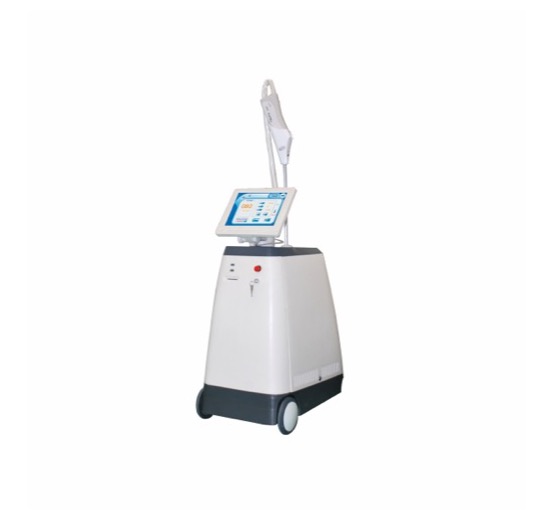
For dark skin (Fitzpatrick IV-VI), the long pulse ND:YAG laser at 1064nm is the safest and most effective hair removal wavelength. Its deep penetration bypasses epidermal melanin. That drastically reduces burn risk while still targeting the hair follicle's dermal papilla and bulge. You'll also get vascular clearance as a side benefit. This isn't theory — it's established photothermolysis physics. It's why clinics serving diverse skin tones should consider a dedicated long-pulse platform like the Pmise YILIYA series.
Hair removal on dark skin? It's a different game. The fundamental risk is epidermal burn — the laser energy gets absorbed by melanin in the skin surface before it ever reaches the follicle. With Fitzpatrick IV-VI skin, that epidermal melanin concentration is high. Use a 755nm alexandrite or even an 808nm diode at aggressive settings, and you're skating on thin ice.
The long pulse ND:YAG laser at 1064nm sidesteps this problem by design. Melanin absorption at 1064nm is significantly lower than at 755nm or 808nm. That means the energy passes through the epidermis with less competition. It reaches the dermal hair structures — the bulb, the bulge, the outer root sheath — where the real work happens. The trade-off? Water absorption is slightly higher at 1064nm. But within the pulse durations used for hair removal (typically 10-100 ms), this is manageable. It actually contributes to a gentler, more distributed heating effect.
Think of it this way: you're not blasting the hair shaft. You're slowly cooking the regenerative cells around it. The long pulse width — usually in the tens of milliseconds — matches the thermal relaxation time of the larger hair follicle structures. Heat builds up slowly and coagulates the target without vaporizing the skin above. That's the difference between a safe treatment and a lawsuit.
If you're buying a machine for dark skin hair removal, here's what you need to check. It separates a clinical-grade unit from a cheap box.
| Parameter | Why It Matters | Typical Range (YILIYA data) |
|---|---|---|
| Wavelength | 1064nm penetrates deeper, avoids epidermal melanin. | 1064nm (fixed) |
| Pulse width | Long pulse (ms range) allows slow heating of follicle, spares epidermis. | 10-100 ms (adjustable) |
| Fluence | Higher fluence needed for dark skin due to lower melanin absorption at 1064nm. | 30-60 J/cm² (depending on spot size) |
| Spot size | Larger spot (10-12mm) improves depth penetration and speeds up treatment. | 6-12 mm |
| Repetition rate | Faster treatments reduce patient discomfort and chair time. | 1-5 Hz |
| Cooling | Contact cooling (sapphire tip) is essential for comfort and epidermal protection. | Integrated contact cooling |
A common mistake? Using too small a spot size on dark skin. Small spots scatter energy more superficially. That increases epidermal load. Stick to 10mm or larger when possible. Also, pulse width should be on the longer end — 30-50 ms is a good starting point for Fitzpatrick V-VI. You're not trying to shatter the hair. You're trying to thermally damage the follicle over time.
Here's a bonus many clinic owners don't factor in when buying a long pulse ND:YAG: it's also a vascular laser. Hemoglobin has a secondary absorption peak at 1064nm. This makes the wavelength effective for treating telangiectasias, spider veins, and even some port wine stains. The long pulse version is particularly good for deeper or larger vessels because the energy penetrates further than 532nm or 595nm.
So when you buy a long pulse ND:YAG for hair removal, you're effectively adding a vascular treatment capability to your menu. That's a dual-use asset. A busy clinic can run a hair removal session in the morning and a leg vein treatment in the afternoon on the same platform. The parameters differ — shorter pulse widths for vessels, longer for hair — but the core laser engine is the same.
Per the device manual for the YILIYA series (Pmise engineering documentation), the adjustable pulse width from 10 to 100 ms lets it straddle both applications effectively. For hair removal on dark skin, you're in the 30-60 ms range. For small facial veins, you might drop to 10-20 ms. That's a versatile tool for your med-spa or dermatology clinic.
Not all long pulse ND:YAG lasers are created equal. Here's a short checklist based on what matters in real-world clinic use.
You might be wondering: why not just use a diode laser at 808nm? Diode lasers are effective. But for very dark skin (Fitzpatrick V-VI), the 1064nm ND:YAG has a safety edge. The 808nm wavelength still has enough melanin absorption to cause epidermal heating in high-fluence settings. The 1064nm is simply less absorbed by melanin. That's physics.
For a deeper dive into wavelength comparison, check out our guide on 808nm vs 755nm vs 1064nm: Best Wavelength for Hair Removal. The short version: if your client base includes a significant number of people with dark skin, you need a 1064nm option. Period.
Also relevant is our article on Laser Hair Removal for Fitzpatrick Skin Types IV-VI: Settings, which goes into specific parameter recommendations for each skin type. The long pulse ND:YAG is the workhorse for that population.
Here's a practical starting protocol based on established clinical practice and manufacturer specifications (Pmise engineering documentation for the YILIYA long pulse ND:YAG).
One more thing: don't expect complete clearance in one session. Hair removal on dark skin with 1064nm typically requires 6-10 sessions spaced 6-8 weeks apart. The results are gradual but very safe — the risk of dyspigmentation is low when parameters are correct.
Pmise's YILIYA long pulse ND:YAG laser is built around a Q-switched and long-pulse dual-mode design. The long-pulse mode specifically uses a stable flashlamp-pumped rod with a pulse-forming network that delivers consistent energy over the full adjustable range. The arm-based delivery system, as documented in the YILIYA-1064QA specifications, allows precise handpiece positioning without operator fatigue — a real factor in a busy clinic running back-to-back sessions.
The unit also includes an integrated sapphire contact cooling tip. That's essential for the high-fluence treatments required in dark skin. Without effective cooling, you're forcing the patient to endure unnecessary discomfort. You're also increasing the risk of post-inflammatory hyperpigmentation.
If you're considering adding a long pulse ND:YAG to your clinic, look at the Long Pulse ND:YAG Laser 1064nm product page for detailed specs. For a broader view of how this fits into a hair removal equipment lineup, see our Diode Laser Hair Removal Machine: How It Works & Why 808nm article — it compares the diode and ND:YAG approaches head-to-head.
Finally, if you're sourcing equipment from China, make sure the manufacturer has verifiable certifications. Our guide on CE Marking for Beauty Machines: What Importers Must Check explains what to look for. A long pulse ND:YAG is an investment — make sure it comes from a manufacturer that stands behind its specs with proper documentation and after-sales support.
Why is the 1064nm ND:YAG laser safer for dark skin than other hair removal lasers?
The 1064nm wavelength has low melanin absorption. That means it passes through the epidermis without heating it. This drastically reduces burn risk for Fitzpatrick IV-VI skin. Shorter wavelengths like alexandrite or diode are absorbed more by epidermal melanin. That increases the chance of burns or hyperpigmentation on darker skin.
Does the long pulse ND:YAG work as well on dark skin as other lasers do on light skin?
Yes. While the 1064nm wavelength has lower melanin absorption overall, it still targets the hair follicle's dermal papilla and bulge. With appropriate fluence and pulse duration, it achieves effective hair reduction on dark skin. The trade-off is that you may need slightly more sessions compared to lighter skin types.
What is 'vascular clearance' and why is it a side benefit of ND:YAG hair removal?
The 1064nm wavelength is also absorbed by oxyhemoglobin. So it can coagulate small blood vessels near the hair follicle. This reduces redness and inflammation around treated hairs. It can even improve conditions like pseudofolliculitis barbae. It's a bonus effect not seen with other hair removal lasers.
Do I need a dedicated long-pulse ND:YAG machine, or can I use a combo platform?
A dedicated long-pulse ND:YAG platform is optimized for hair removal with adjustable pulse widths and spot sizes. Combo platforms may have the 1064nm wavelength but often lack the specific parameters needed for safe, effective hair removal on dark skin. For best results and safety, a dedicated system is recommended.
Every Pmise machine is verified through rigorous testing. Tell us your target treatments and market.